
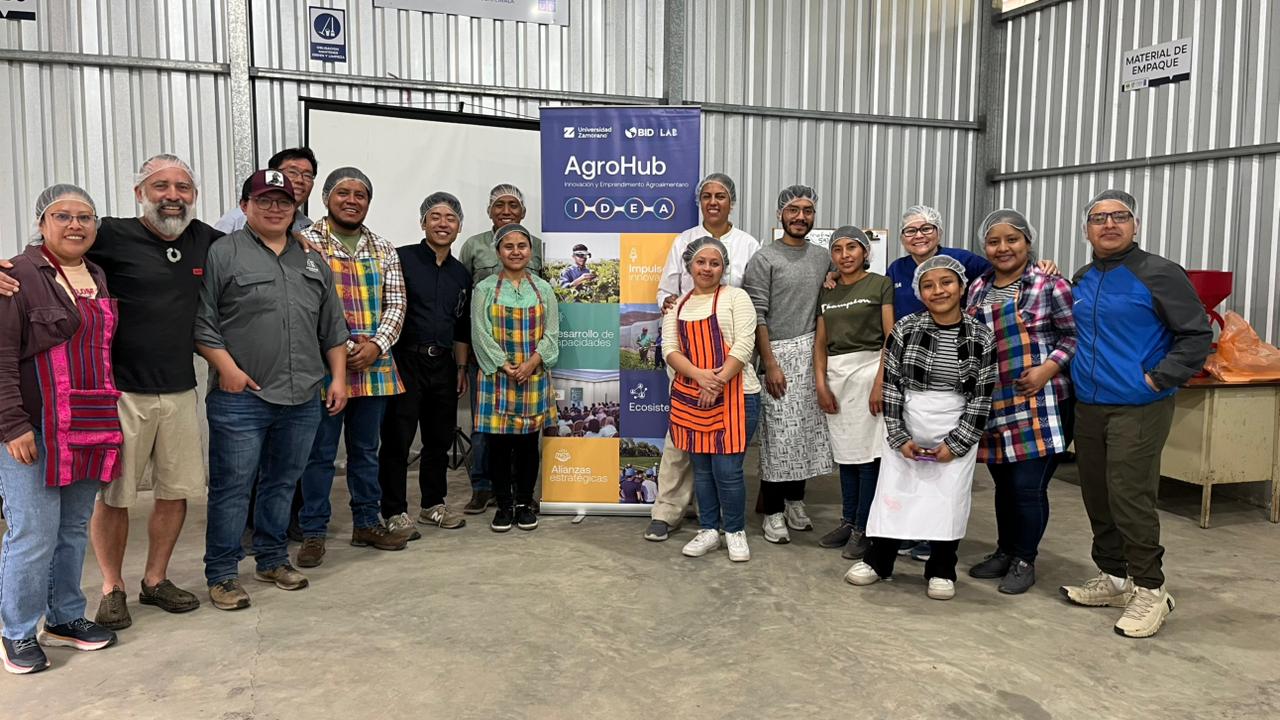
Through a strategic partnership aimed at strengthening the competitiveness of the coffee sector’s productive matrix, the AgroHub project, implemented by Zamorano University and BID Lab, is carrying out a series of technical interventions designed to develop the coffee value chain in the Guatemalan highlands. Under a circular bioeconomy and full-utilization approach, these actions are being executed in synergy with JICA’s CAFEPROCO project, with the goal of transferring specialized knowledge for the creation of value-added products, transforming what has traditionally been considered waste into an input with high commercial potential.
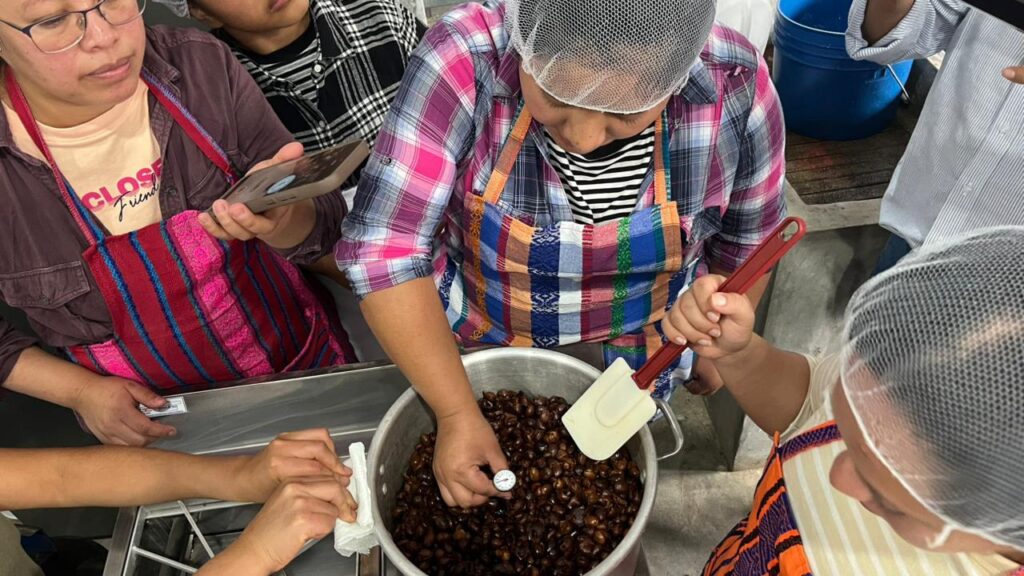
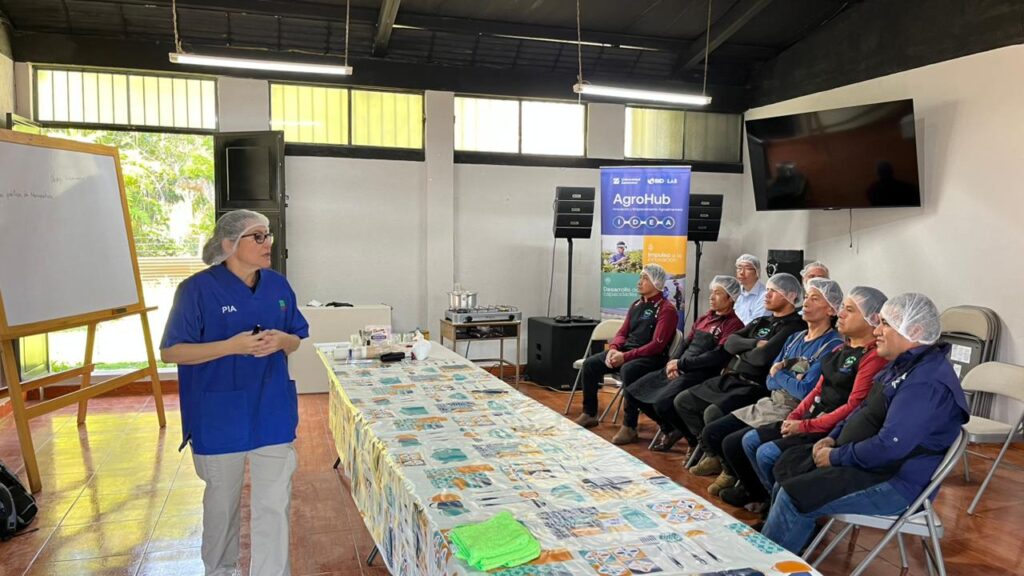
The operational phase focused on a technical training program on the processing and standardization of syrup made from dehydrated coffee husk, a byproduct rich in antioxidants and phenolic compounds that represents an opportunity to diversify income for small producers. The training was led by Eng. Sandra Espinoza, New Product Development Specialist at Zamorano University, through training sessions with the organizations La Voz que Clama en el Desierto in San Juan La Laguna, ADECNISA in San Pedro La Laguna, and Juan Ana in San Lucas Tolimán. Participants learned about production methods and explored new commercialization pathways for coffee husk.
To consolidate the field findings, a technical roundtable was held with the participation of CAFEPROCO-JICA’s strategic counterparts, the National Coffee Association (ANACAFÉ), and the Directorate for the Strengthening of Productive Entrepreneurship (DIFOPROCO-MAGA). During this meeting, the prototypes obtained were presented and the roadmap for scaling these innovations within the region’s AgriFoodTech ecosystem was discussed, with a focus on overcoming market entry barriers and strengthening post-harvest capacities.
Through AgroHub, the commitment to agrifood innovation is reaffirmed, promoting more resilient and profitable production models aligned with global trends in conscious consumption and sustainability across the region.
 English
  Spanish