
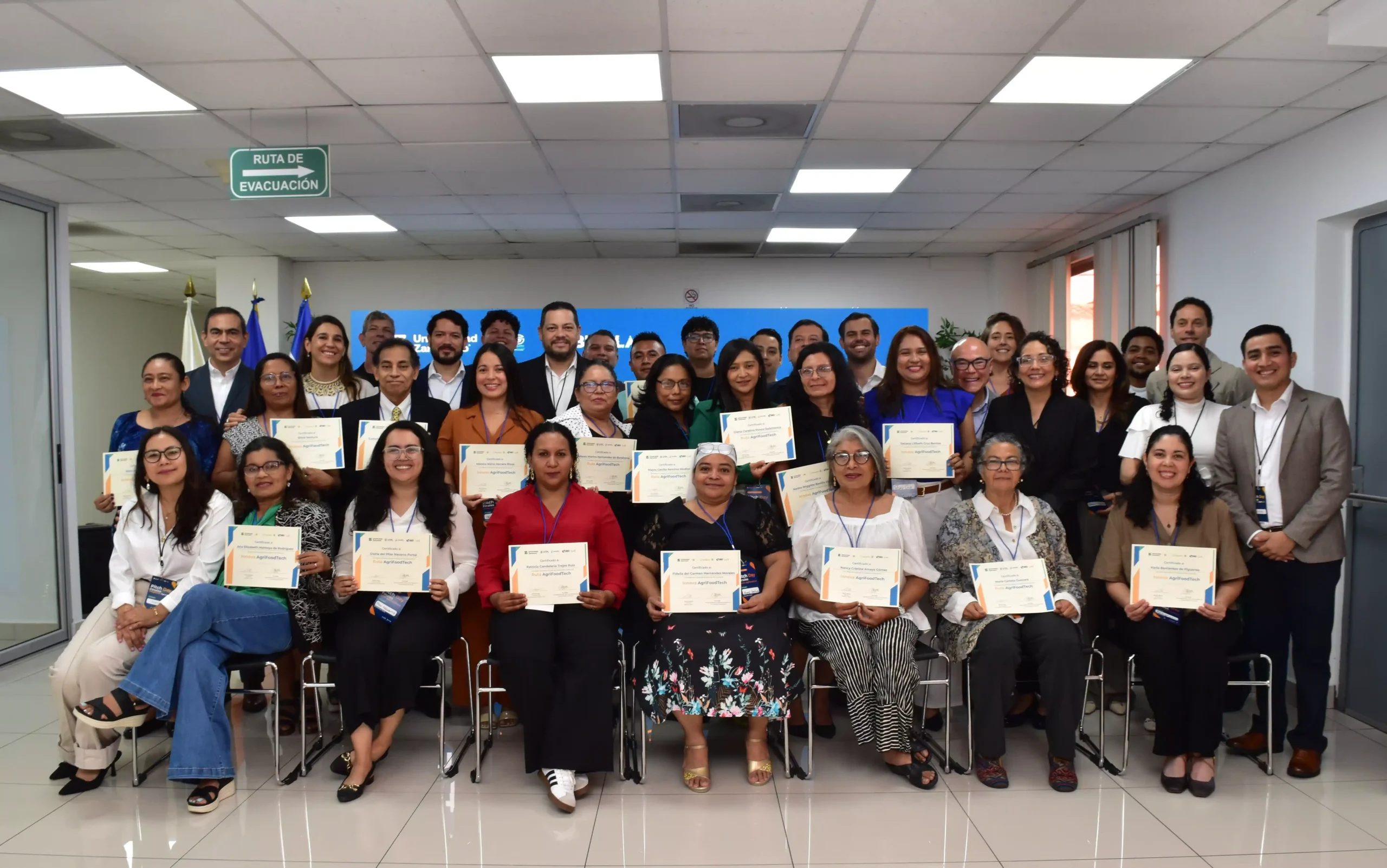
AgroHub, an initiative implemented by Zamorano University with the support of BID Lab, continues to advance agrifood innovation across Central America through its Innova AgriFoodTech (incubation) and Ruta AgriFoodTech (acceleration) programs. Through these initiatives, 92 startups from El Salvador, Guatemala, and Honduras successfully completed a comprehensive business development process, strengthening their capacity to develop innovative solutions with strong growth and impact potential.
The participating startups represented a wide range of strategic sectors, including agribusiness, AgriFoodTech, bio-inputs, circular economy, processed foods, agricultural production, logistics, tourism, education, food security, and digital commerce. Throughout the programs, they strengthened their business models, adopted tools to enhance their competitiveness, and advanced the development of solutions designed to address the current challenges facing the region's agrifood systems.
The methodology combined virtual training, specialized mentoring, advisory sessions, and in-person workshops, providing technical and strategic support to participants throughout the entire process.
The Innova AgriFoodTech program offered an incubation process consisting of virtual masterclasses, mentoring sessions, and personalized guidance focused on business model validation, value proposition development, customer discovery, financial planning, commercial strategies, marketing, impact measurement aligned with the Sustainable Development Goals (SDGs), and investment readiness, including pitch preparation. The program was implemented by Nesters and The Yield Lab, whose specialized methodologies helped strengthen the development of innovative startups.
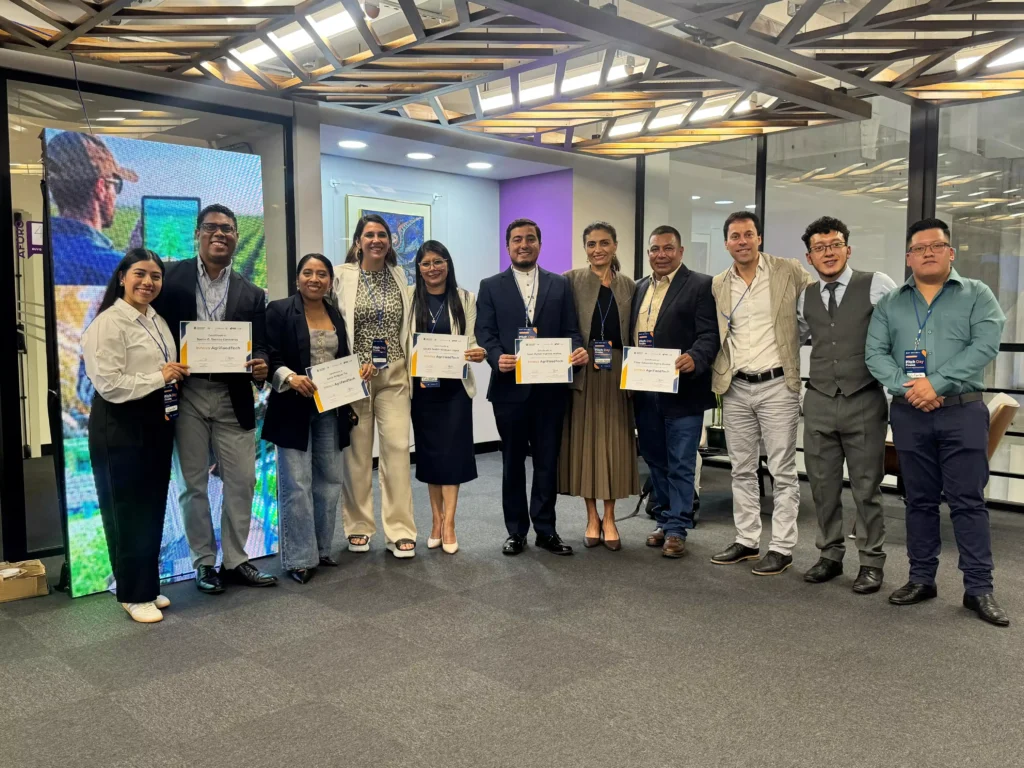
Meanwhile, Ruta AgriFoodTech delivered an acceleration process that included virtual sessions, one-on-one mentoring, and in-person activities focused on business diagnostics, business model validation and refinement, scalability, operations, sustainability, financial management, and Demo Day preparation. The program was implemented by Prendho, the business incubator of the Universidad Técnica Particular de Loja (UTPL), which contributed its expertise in business acceleration and startup scaling.
The results demonstrate the initiative's regional impact. In El Salvador, 27 startups successfully completed the incubation and acceleration programs. These ventures developed solutions related to the circular economy, food processing, agricultural production, bio-inputs, AgriFoodTech, services, logistics, and tourism, incorporating innovations such as agricultural bio-inputs, organic products, protected agriculture, digital tools, and e-commerce platforms for agrifood commercialization.
In Guatemala, 34 startups completed both programs, strengthening initiatives focused on natural bio-inputs, mobile applications for agriculture, beekeeping diversification, food agroindustrialization, digital commercialization, the circular economy, and technology-based solutions for the agrifood sector.
In Honduras, 31 startups completed the incubation and acceleration programs. Their initiatives focused on agribusiness, sustainable food production, the circular economy, and AgriFoodTech, highlighting projects related to specialty coffee, processed foods, bio-inputs, agritourism, construction materials made from agricultural waste, and the commercialization of organic and artisanal products.

As part of the program's closing activities, participating startups competed in pitch competitions for seed capital funding that will enable them to continue strengthening and scaling their business models. The initiative includes 10 seed capital awards of USD 10,000 for startups participating in the Ruta AgriFoodTech program, follow-up technical assistance for the winning ventures, and a USD 1,000 award for the top-performing Innova AgriFoodTech startup in each of the three participating countries. These initiatives highlight the potential of agrifood innovation to strengthen the sector's competitiveness, promote sustainability, and drive economic development throughout Central America.
AgroHub extends its gratitude to the mentors and strategic partners whose expertise, guidance, and commitment made the successful implementation of both programs possible, contributing to the strengthening of the region's agrifood innovation ecosystem. In Guatemala, the initiative was supported by AGEXPORT, Universidad del Valle de Guatemala, ICTA, JICA Guatemala, CAFEPROCO, ILAN, the MOSCAMED Program, and ANACAFÉ. In El Salvador, strategic partners included FUSADES, Universidad Francisco Gavidia, the Ministry of Economy, Fundación Gloria Kriete, Banco Atlántida, PEOF, IICA, and CATIE El Salvador. In Honduras, key partners included Proyecto ComRural, Cargill, Impact Hub Honduras, the Ministry of Agriculture and Livestock, FICOHSA, FUNDER, Fundación Terra, ALTERFIN, and Atlantic Consulting Group.
Through this initiative, AgroHub reaffirms its commitment to strengthening Central America's agrifood innovation ecosystem by fostering startups capable of developing sustainable solutions, accelerating the transformation of the agrifood sector, and contributing to the region's economic growth through innovation, technology, and entrepreneurship.

 English
  Spanish