
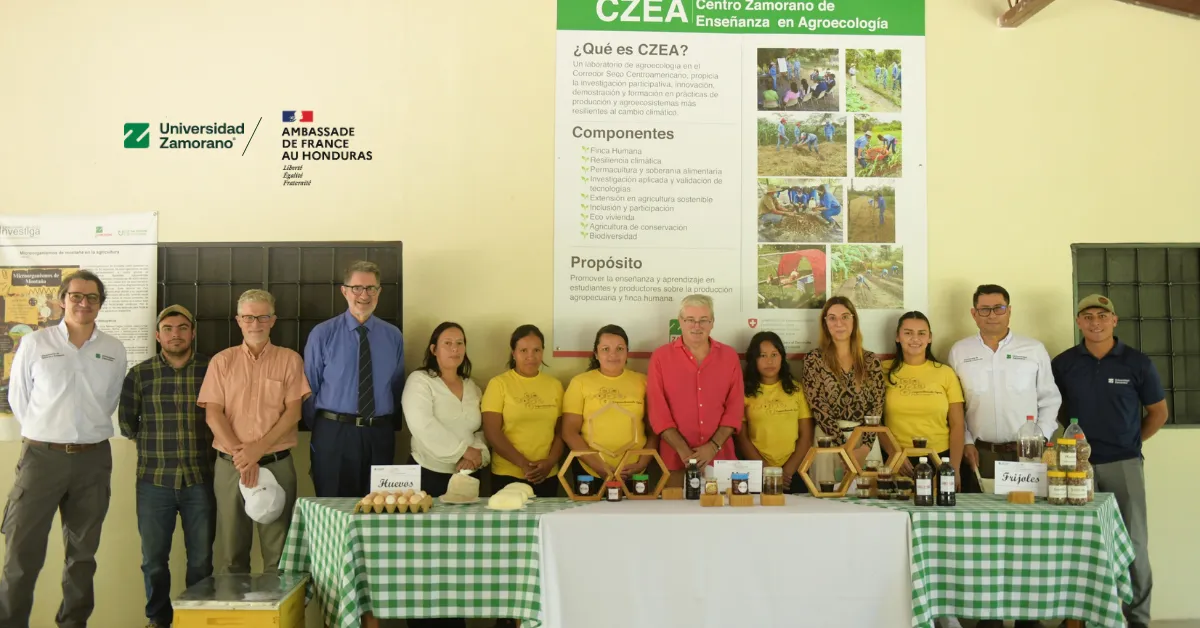
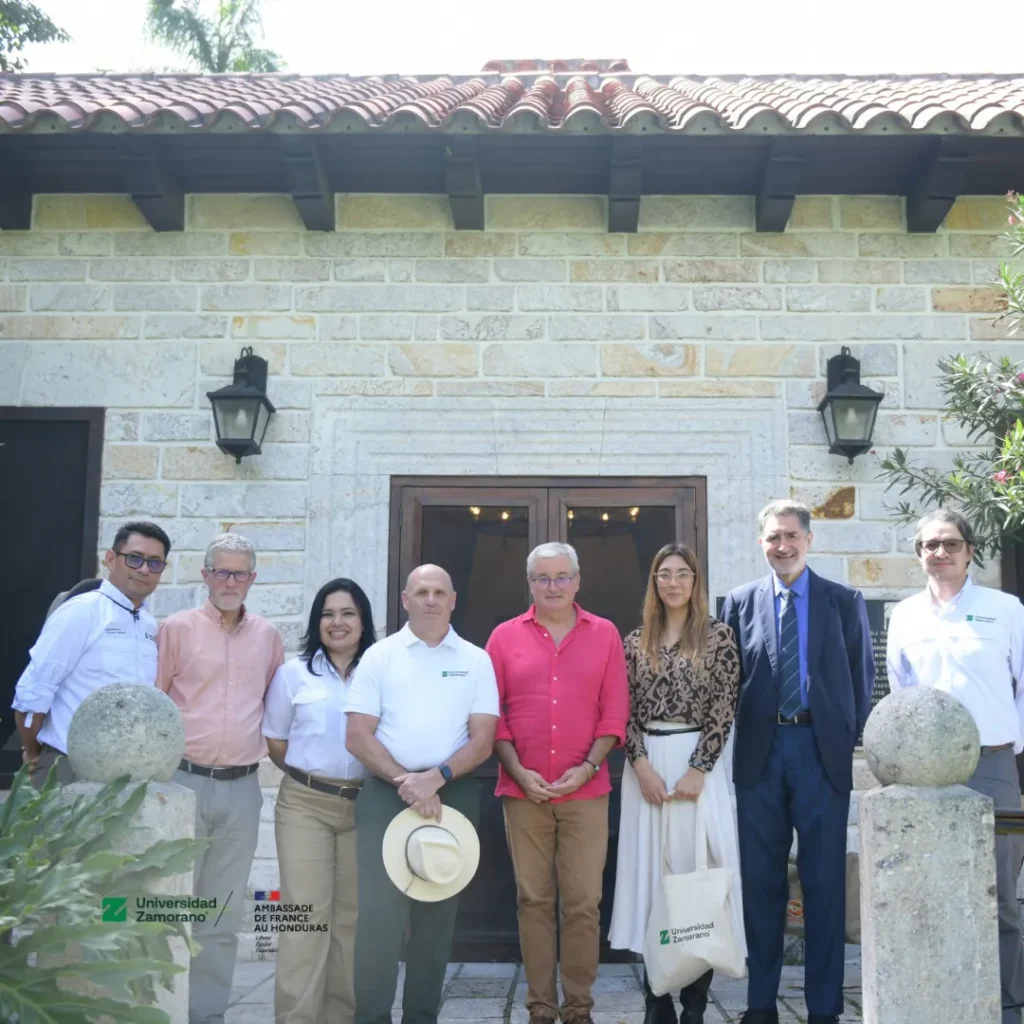
This week, an “Equipe France” delegation, including Cédric Prieto, Ambassador of France to Honduras; Chloé Rabiet, Head of Cooperation; Yann Lorvo, Regional Counselor for Cooperation and Cultural Action at the Embassy of France in Guatemala, with regional responsibilities covering Belize, El Salvador, Honduras, and Nicaragua; Tania G. Aguilar, Communications Officer at the Embassy of France in Honduras; and Tanguy Lafarge, Regional Director for the Americas at the French Agricultural Research Centre for International Development (CIRAD), visited the campus of Zamorano University.
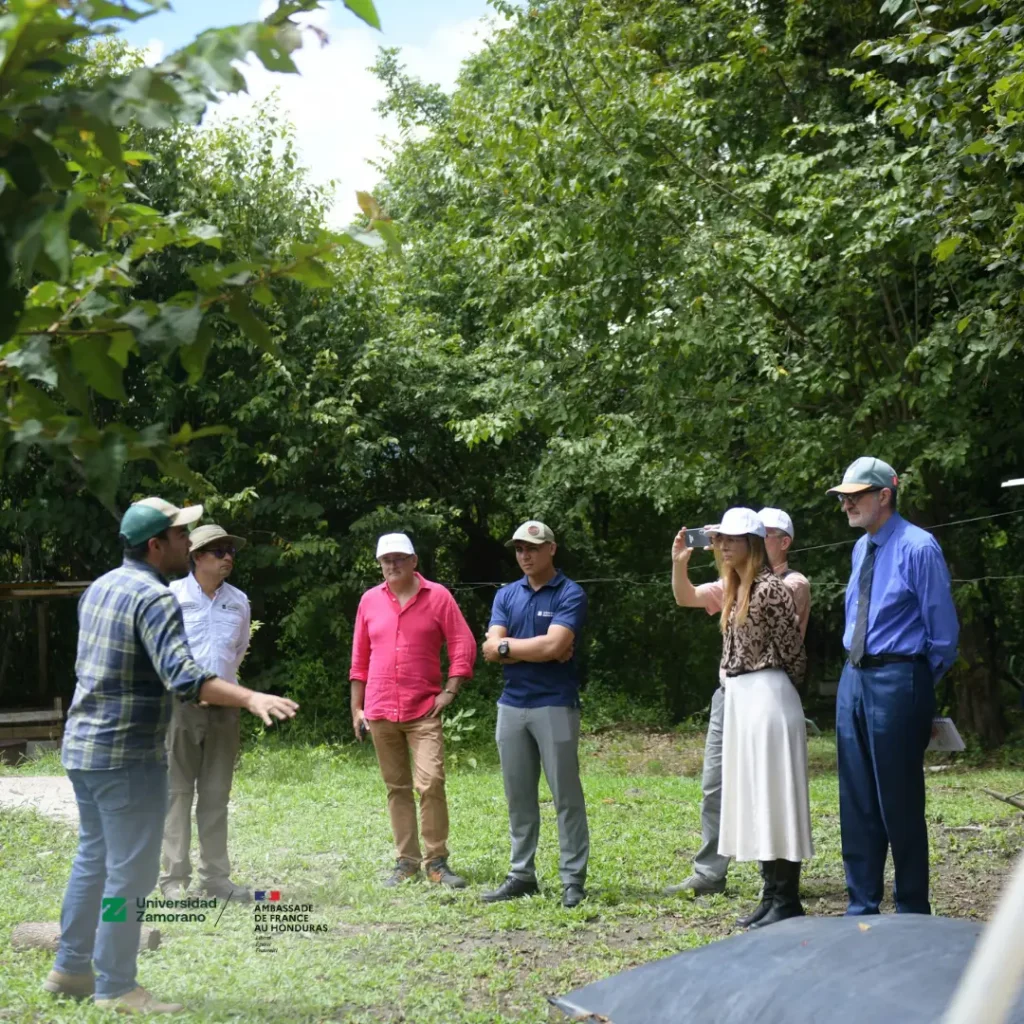
During the visit, Zamorano University’s Department of Environmental Sciences and Development presented several projects currently being carried out with international partners. The delegation also visited the Agroecological Farm, a living laboratory where second-year students gain hands-on experience while contributing to the innovation and validation of agroecological practices. The farm also serves as a “field school” and an important training center for producers from across Honduras, with a focus on sustainable production practices.
A key part of the visit was a meeting with a group of women participating in the Yeguare Project, funded by the Embassy of France in Honduras. The initiative seeks to strengthen ecosystem protection and sustainable livelihoods in rural communities throughout the Santa Inés watershed by promoting beekeeping as an inclusive green business model.
Through the project, 18 women from the Santa Inés watershed have received training and ongoing support to develop their own beekeeping ventures. By learning hive management and honey production, participants have strengthened their skills and created new opportunities to increase their income while contributing to the conservation of their local environment.
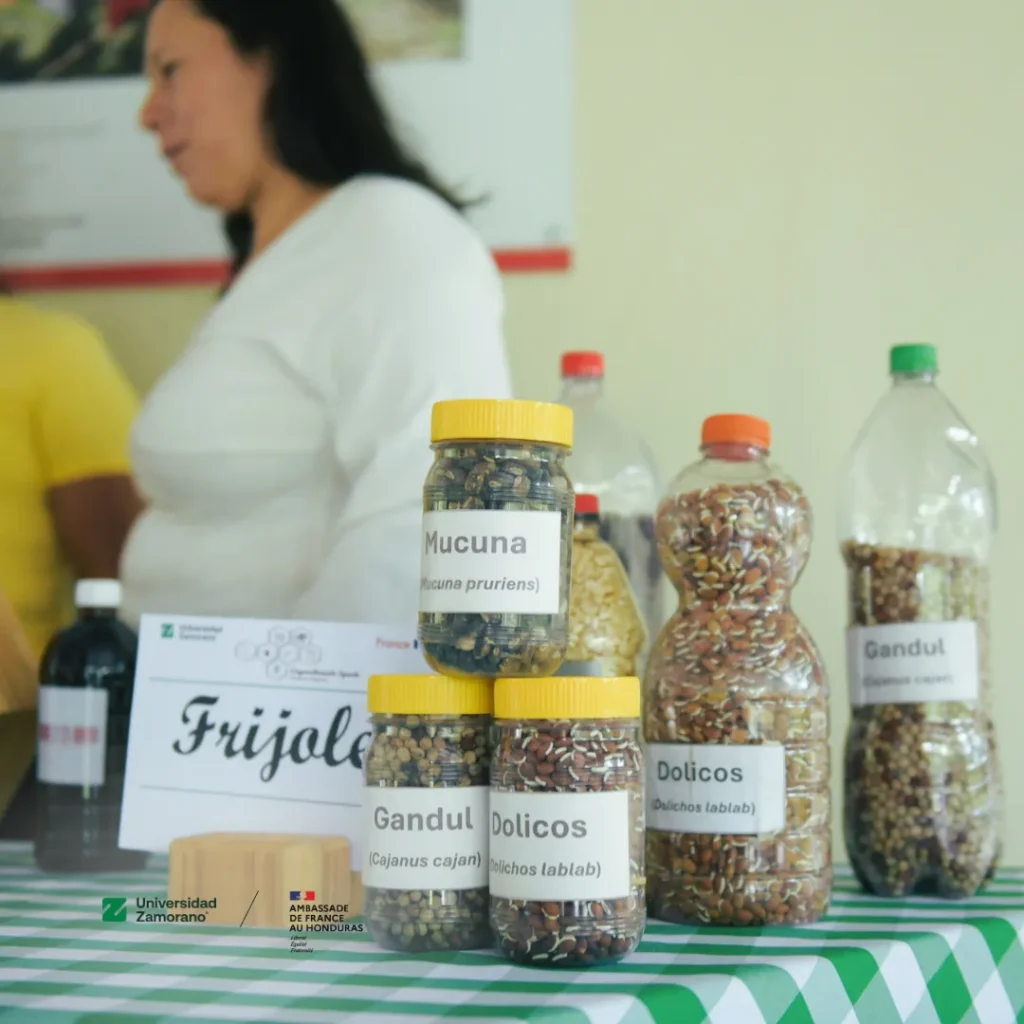
The meeting gave the delegation an opportunity to see the project’s progress firsthand and hear directly from participants about their experiences. The interest this business model has generated within their communities also highlights its potential to inspire new initiatives that create economic opportunities and contribute to the sustainable development of the region.
CIRAD’s participation also provided an opportunity to explore new areas for collaboration in research and innovation. This French public research organization works alongside partners to address challenges related to sustainable agriculture, biodiversity, and climate change. Its regional office for Mexico, Central America, and the Andean countries is based in Bogotá, Colombia.
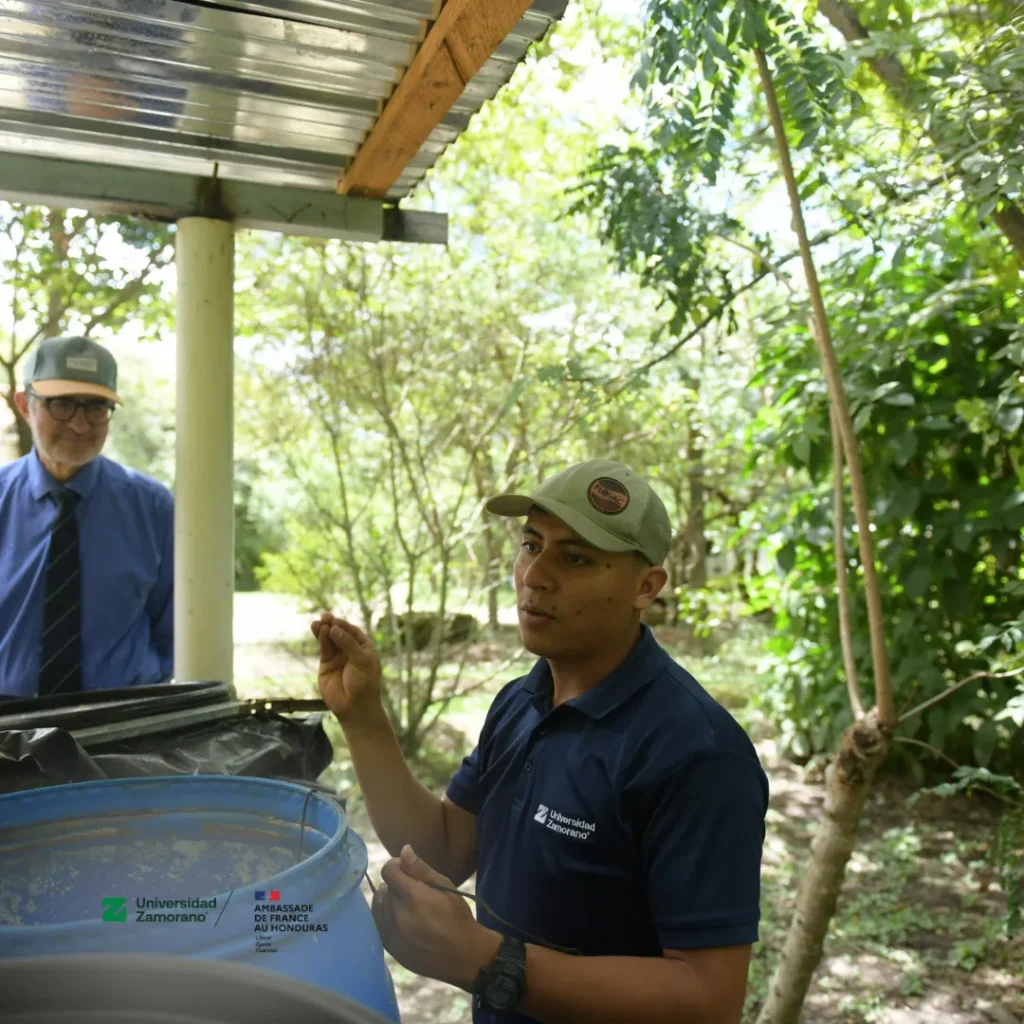
The visit marks another step forward in a partnership that continues to grow, bringing together knowledge, research, and community engagement to advance sustainable solutions with meaningful impact across the region.
 English
  Spanish