
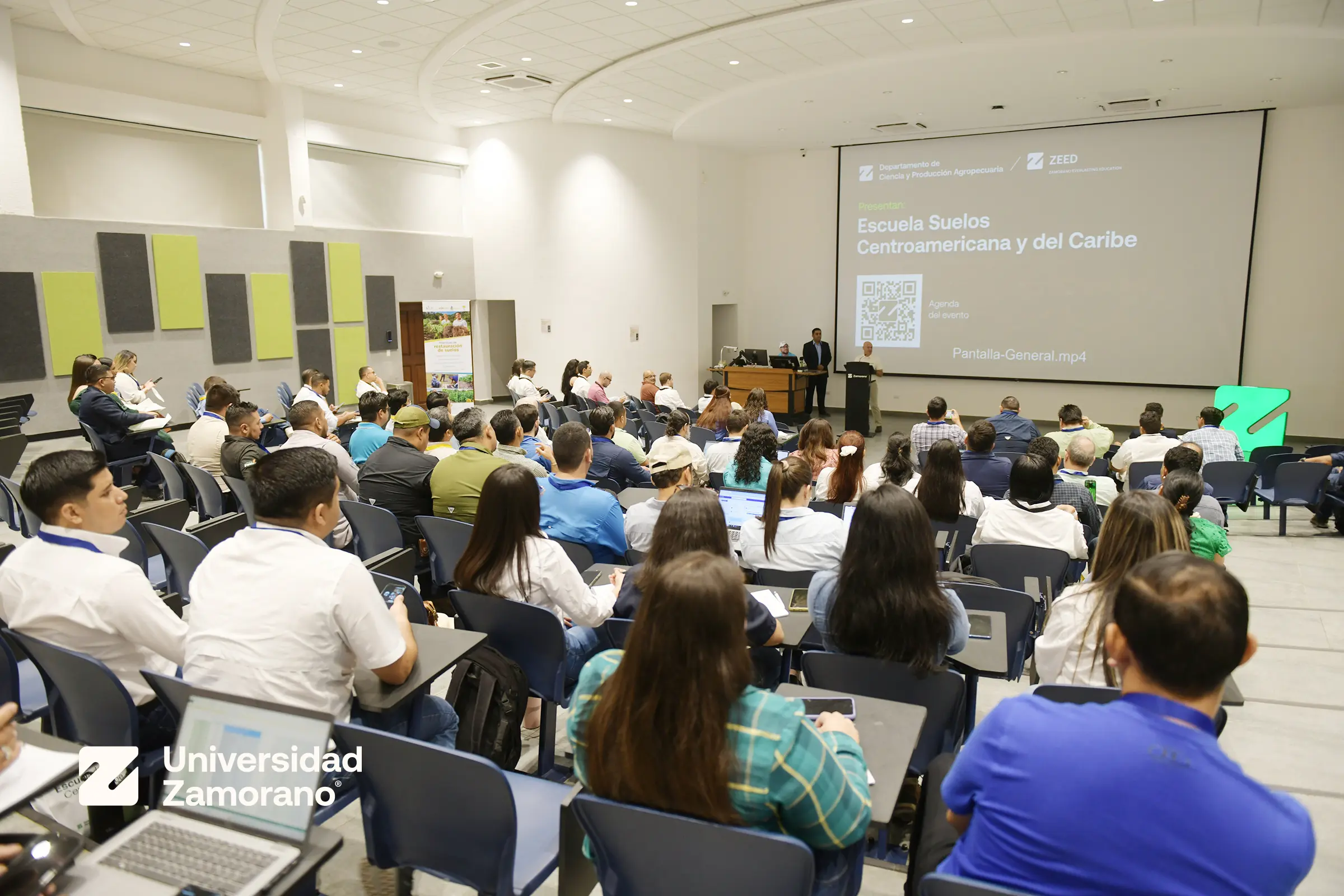
Universidad Zamorano successfully hosted the first Central American and Caribbean Soil School, an academic and technical event that brought together more than 150 participants, including specialists, researchers, students, and professionals from the agricultural sector representing several countries across the region.
The initiative was organized by Zamorano Everlasting Education (ZEED) and the Department of Agricultural Science and Production, reaffirming the institution’s commitment to the generation and transfer of scientific and technical knowledge for more sustainable, resilient, and innovative agriculture.
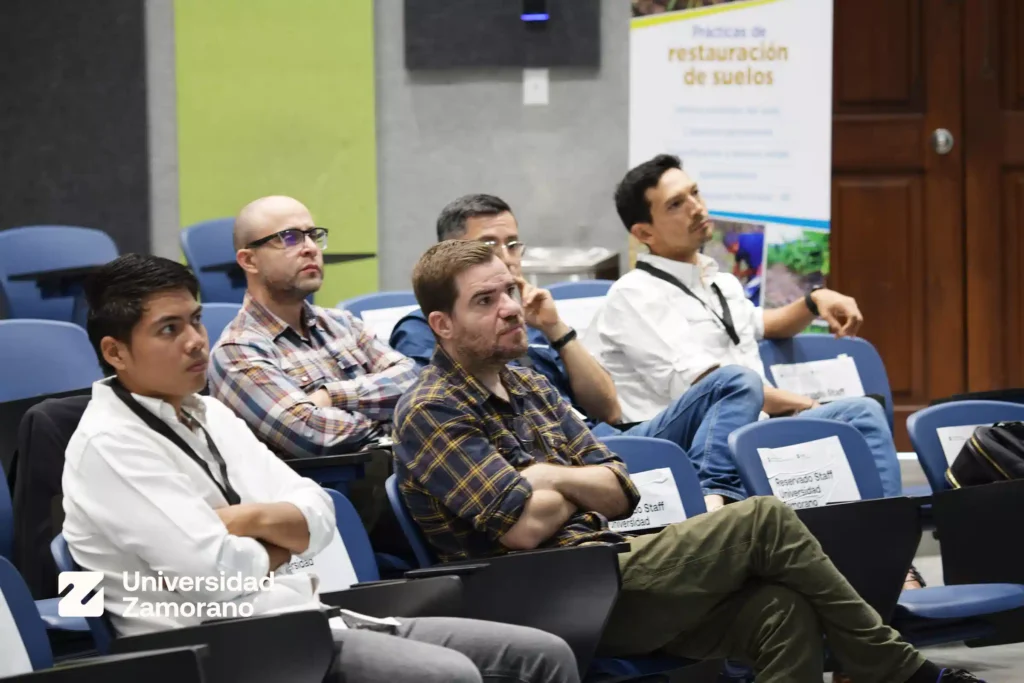
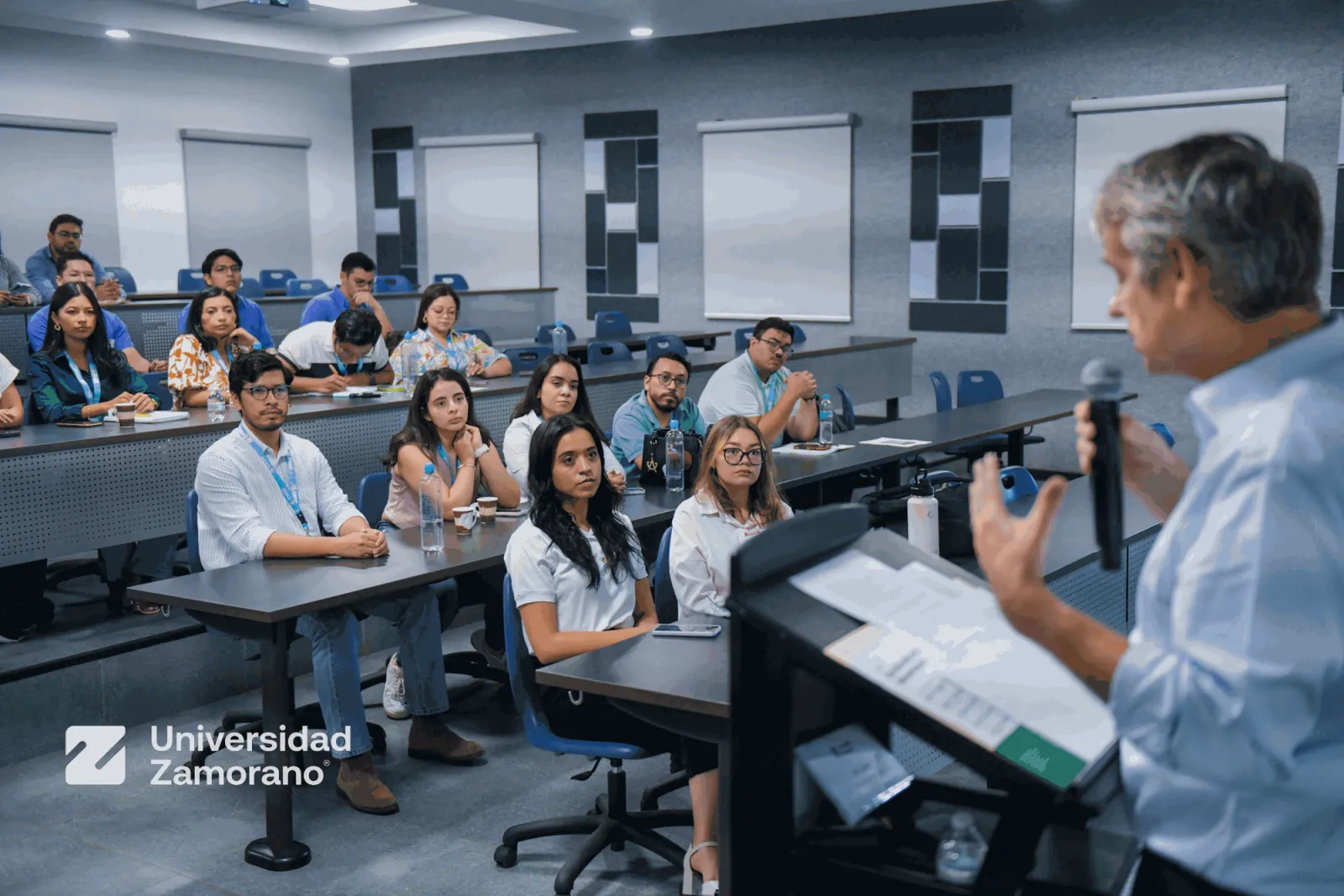
Over the course of the two-day event, 25 national and international speakers from Argentina, Brazil, Colombia, Costa Rica, Nicaragua, Guatemala, and Honduras shared experiences, research findings, and scientific advances in key areas related to sustainable agricultural development. The event featured keynote lectures delivered by distinguished international experts, including Dr. Filipe Behrends Kraemer from the University of Buenos Aires, who addressed topics related to agricultural sciences and sustainable soil management; Dr. Walter Osorio from the National University of Colombia and the University of Hawaiʻi, who shared insights on soil health and tropical crops; José Eduardo Villalobos Leandro from EARTH University, who presented applications of spectroscopy and machine learning algorithms for soil analysis; Ana Lucía Núñez Villalobos from the SoilFER-FAO Honduras project, who discussed functional soil microorganisms and agricultural sustainability; and Diego Camilo Peña Quemba, researcher at FEDEARROZ in Colombia, who shared experiences in soil research and management applied to the agricultural sector.
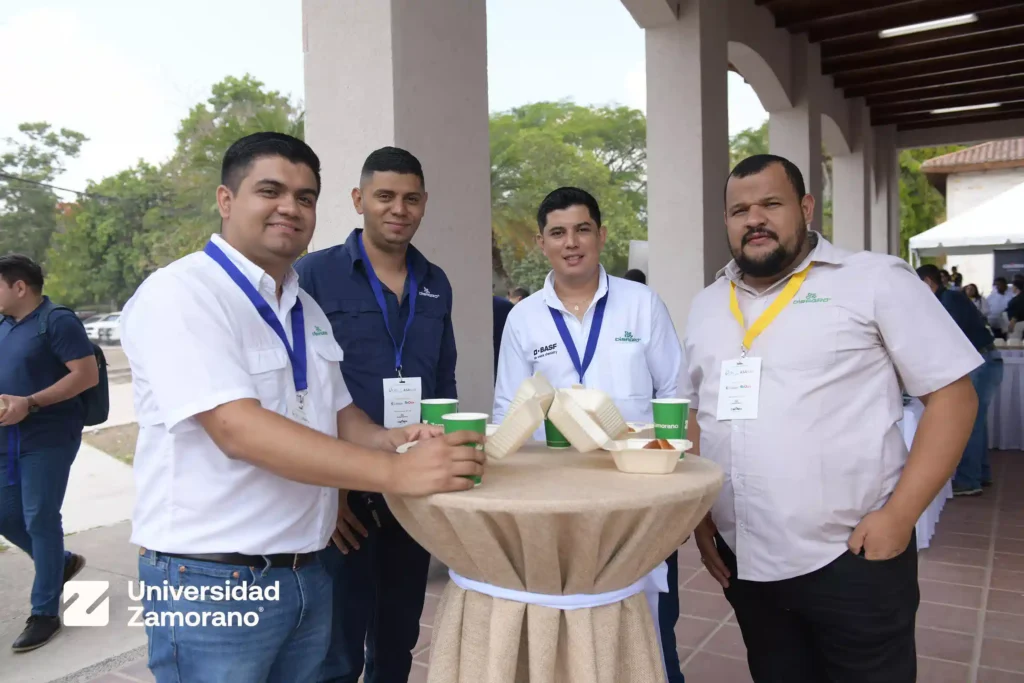
In addition to the keynote lectures, the program included technical presentations on applied research in soil fertility, conservation, biotechnology, and agronomic management in tropical production systems, promoting scientific and professional exchange among participants from Honduras, El Salvador, Guatemala, Nicaragua, Costa Rica, Panama, Colombia, Argentina, Brazil, and the United States.
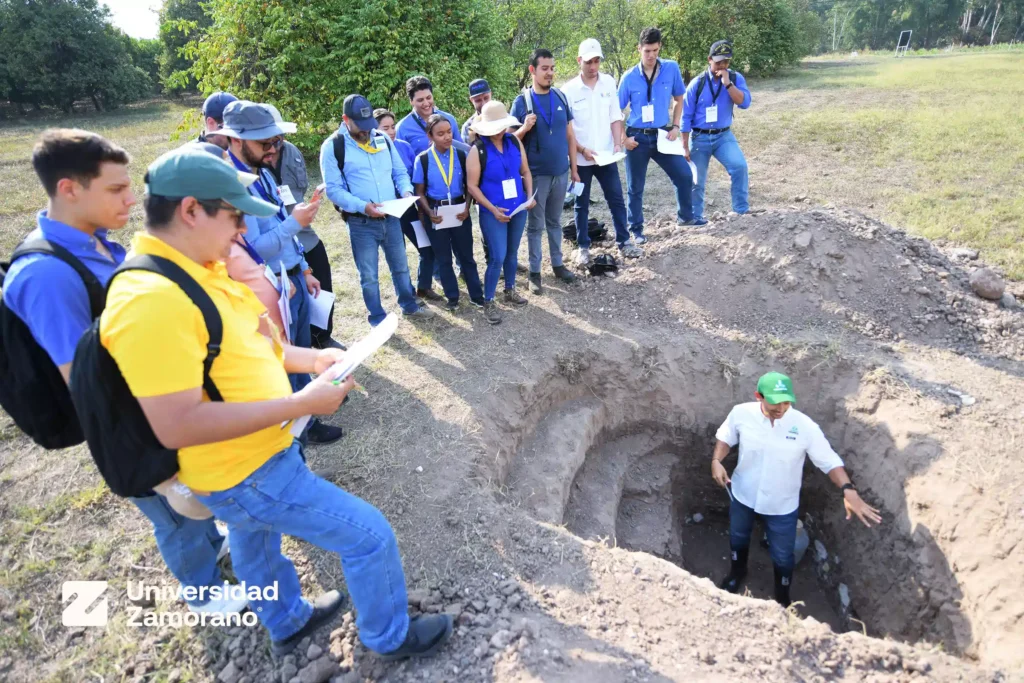
As part of the event activities, participants engaged in hands-on field workshops focused on soil pit description, soil conservation, microbiology, and soil analysis interpretation, strengthening practical learning and technical interaction between attendees and specialists. The event also fostered networking and collaboration opportunities among representatives from academic institutions, international organizations, companies, and students interested in advancing sustainability within the agricultural sector.
The Central American and Caribbean Soil School was supported by key strategic partners and sponsors, including Catholic Relief Services (CRS), Agua y Suelo para la Agricultura, Grupo Cadelga, ReDox, Disagro, and Calidra. The event also received support from the Government of El Salvador through the AGROBECAS program, promoted by the Ministry of Foreign Affairs, SETEFE, and the Salvadoran Agency for International Cooperation (ESCO).
Through initiatives such as this, Zamorano University continues to strengthen its position as a regional leader in agricultural education, research, and the promotion of sustainable practices aimed at shaping the future of agriculture in Central America and the Caribbean.
 English
  Spanish