
Panorama actualizado de moscas de la carne (Diptera: Sarcophagidae) en Honduras
El Dr. Jesús Orozco, Curador y Profesor Asociado de Entomología del Departamento de Ciencia y Producción Agropecuaria, y su equipo presentaron un estudio pionero dedicado a documentar la diversidad de moscas de la carne —familia Sarcophagidae— en Honduras. Su investigación, publicada en la revista Biota Neotrópica, identificó un total de 13 especies de Sarcophagidae. De ellas, 9 representaron nuevos registros para la fauna de Honduras.
By documenting these species in decomposition-related contexts, the authors highlight the ecological relevance of this group. Flesh flies play essential roles in natural processes such as the decomposition of organic matter and nutrient recycling.
This finding broadens the country’s taxonomic knowledge, demonstrating that the diversity of necrophagous dipterans had previously been underestimated. Beyond taxonomy, this work provides a fundamental basis for future research in areas such as forensic entomology, decomposition ecology, public health, and biodiversity conservation.
The authors recommend continuing systematic inventories using different types of baits and environments to deepen the understanding of Sarcophagidae fauna. With a more complete species inventory, it will be possible to study their geographic distribution, behavior, seasonality, and potential roles in environmental or public health scenarios.
For more information:jorozco@zamorano.edu
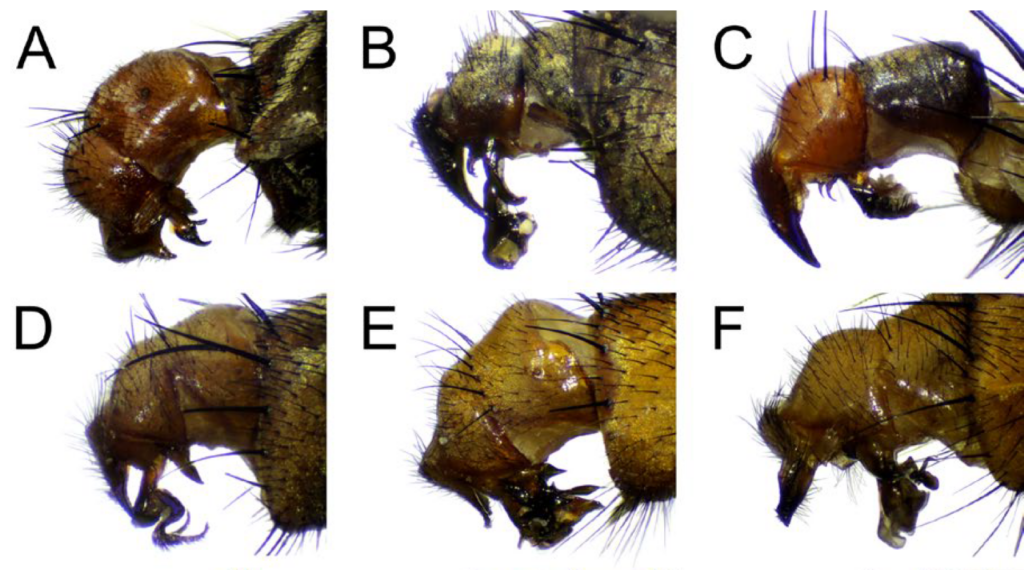
Terminaliamasculina of the flesh fly specimens —familySarcophagidae— collected in Zamorano, Francisco Morazán, Honduras.
 English
  Spanish