
Primer registro de la mariquita asiática Cheilomenes sexmaculata en Honduras
El Dr. Jesús Orozco, Curador y Profesor Asociado de Entomología del Departamento de Ciencia y Producción Agropecuaria, en colaboración con los investigadores Samuel Treminio y Katerin Veroy, han documentado, por primera vez en Honduras, la presencia de la mariquita asiática Cheilomenes sexmaculata(Fabricius, 1781). The study was published in the scientific journalCheck List..
Cheilomenes sexmaculataalso known as the zigzag six-spotted lady beetle, is native to Asia and Australia but has expanded its range into the Americas and Europe, favored by climate change and human-mediated introductions. It is a well-known predator of aphids and other soft-bodied insects, making it a potentially useful agent for biological control in agriculture. However, the researchers also warn that invasive lady beetles may displace native predators and affect non-target arthropods, as has been observed with other introduced species.
his discovery makes Honduras the second country in the Central American isthmus, after Panama, to officially report the presence of the species. Given the ecological and climatic similarities across the region, the authors suggest thatC. sexmaculatamay already be present in neighboring countries, raising important questions about its spread, ecological impact, and management potential.
For more information:jorozco@zamorano.edu
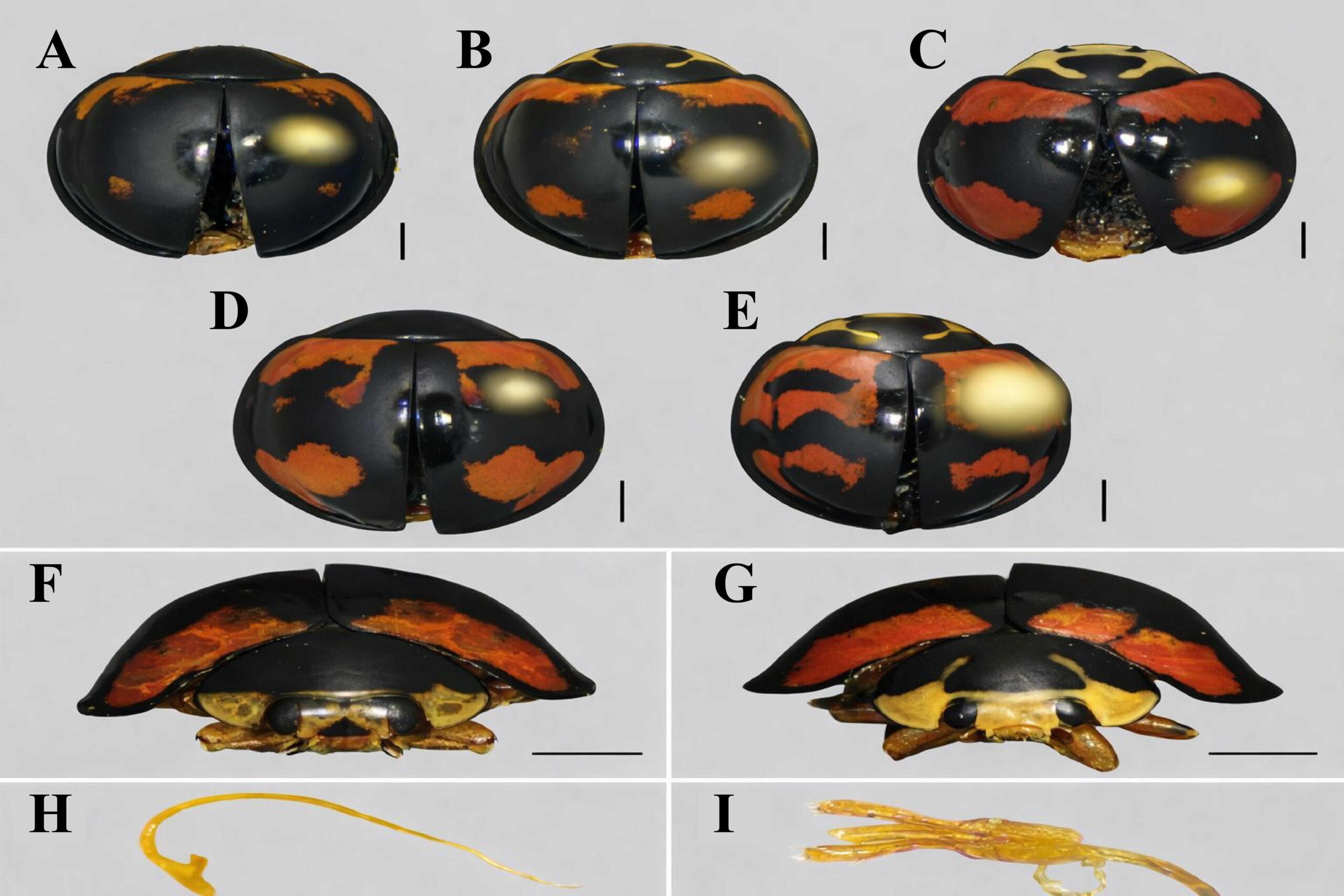
Specimens of Cheilomenes sexmaculata collected in Zamorano, Francisco Morazán, Honduras. Among the 26 individuals found in 2023, the researchers identified five color morphotypes: three dark types (A, B, C) and two light types (D, E), providing valuable information about the phenotypic diversity of the species in Central America.
 English
  Spanish